

Behind the Rows: Sustainable Growing Practices For Peonies at Portneuf Valley Peonies in 2026
By Melissa Warner, Portneuf Valley Peonies — Pocatello, Idaho
“When well provided for, peonies give increasing rewards for years and will continue to do so indefinitely, sometimes flowering at abandoned homesteads long after everyone has gone.”
That image, a peony bush blooming alone in a forgotten field, captures something true about these plants. They are survivors and rewards all at once. On our farm, we grow row upon row of them under Idaho’s wide-open skies, and every spring, that first burst of dark red foliage pushing through the black mulch still feels like a kind of miracle. Whether you have half an acre or a single raised bed, peonies deserve a spot in your garden. This guide brings together everything we’ve learned on the farm, plus the best horticultural wisdom we know, to help you grow peonies that thrive for decades.
01 – B E F O R E Y O U P L A N T
Know Your Peony: Not all peonies are the same, and choosing the right type for your climate is the single most important decision you’ll make. There are three primary types of peony groups to know:

Farm Tip: If you’re in USDA Zone 9 (parts of California, southern Texas, Louisiana), standard herbaceous peonies are a stretch, but Itoh varieties give you the best shot at success. Plant them with afternoon shade and choose early-blooming cultivars.
02 – L O C A T I O N & S O I L
Sun, Drainage & Depth: Peonies are not difficult plants, but they are particular about a handful of conditions. Get these right and they will reward you for a lifetime.
Full sun is best: Aim for at least 6 hours of direct sunlight per day. In warmer climates (Zone 8+), some afternoon shade helps extend bloom time.
Well-drained soil is non-negotiable: Peonies sitting in soggy soil will rot. If your soil is heavy clay or tends to pool, plant in a raised bed.
Keep roots away from tree competition: Root competition from large trees and shrubs is a known bloom-killer. Give peonies their own open space.
Soil pH: Neutral to slightly alkaline (pH 6.5–7.5). Peonies tolerate a wide range but prefer some organic richness.
Space generously: Plant individual plants 3–4 feet apart. Good air circulation is your best defense against fungal disease.
“A peony planted in the right spot today will outlive you. Choose that spot carefully.”
03 G E T T I N G S T A R T E D
Planting Peonies Right:
When to plant: Late winter is ideal — about 4–6 weeks before your region’s first hard freeze. This gives roots time to settle before Spring. Spring planting works too, though bare-root plants set out in spring may not bloom until the following year.
The most critical rule: Do not plant too deep. This is the number-one reason peonies fail to bloom. The “eyes” — the small pink or white growth buds at the top of the root — should sit no more than 1 to 2 inches below the soil surface. Deeper than 2 inches and the plant will likely grow lush foliage year after year without a single flower.
Step by step: Dig a hole 12–18 inches deep and wide. Mix in a shovelful of compost and a handful of balanced organic fertilizer, then build a small mound of soil in the center. Drape the roots over this mound with the eyes facing up. Backfill halfway, water deeply to settle the soil, then finish filling. For bare-root plants arriving by mail, soak them in cool water for 30 minutes before planting.

04 W A T E R W I S E L Y
How & When to Water Peonies: Peonies are not thirsty plants. Overwatering is one of the most common mistakes home gardeners make, and it can invite the fungal diseases that plague these otherwise carefree perennials. The goal is consistent moisture — never soggy, never bone dry.
At planting: Water deeply and thoroughly right after planting, ensuring moisture reaches the bottom of the hole.
Year one (establishment): Water every 7–10 days during the growing season, or every couple of days if it hasn’t rained. Allow the top inch of soil to dry slightly between waterings. ✦
Established plants: Once established (usually after year two), peonies become remarkably drought-tolerant. Provide roughly 1 inch of water per week during dry summer months.
During budding: Be especially attentive while buds form — dehydration at this stage can cause buds to drop before opening.
After blooming: Continue watering through summer even after flowers fade. Foliage needs moisture to store energy for next year’s blooms.
Water at the base: Use a watering wand or drip system at soil level, not overhead. Wet foliage invites botrytis and powdery mildew.
Dormant season: Once herbaceous peonies die back in fall, stop watering. They need no irrigation during dormancy.
“The first two inches of soil should be dry before you water a mature peony. Trust the plant — it knows how to thrive.”
05 Y E A R – R O U N D C A R E
Feeding, Support & Maintenance: Once established, peonies ask very little and give so much. Here’s what ongoing care looks like in practice:
Fertilizing: Apply a low-nitrogen blend (5-10-10) in early spring when red shoots first emerge — before buds reach pea-size. Too much nitrogen produces lush foliage at the expense of flowers.
Supporting heavy blooms: Large double-flowered varieties can topple under their own weight after rain. Install grow-through peony rings early in spring so stems grow up naturally through the support.
Deadheading: Snip blooms just above the first set of healthy leaves to prevent the plant from wasting energy on seed production.
Fall cutback: Once foliage has died back fully, cut stems to ground level. Do not compost any diseased material — bag and discard it.
Mulching: A light layer of mulch after planting helps retain moisture. Keep mulch away from the crown of established plants — burying the crown promotes root rot and suppresses blooming.
Division: Peonies rarely need dividing. If you want more plants, divide mature clumps in fall — each division should carry 3–5 eyes. Divided plants may take 2–3 years to bloom freely again.

06 H A R V E S T & E N J O Y Y O U R P E O N I E S
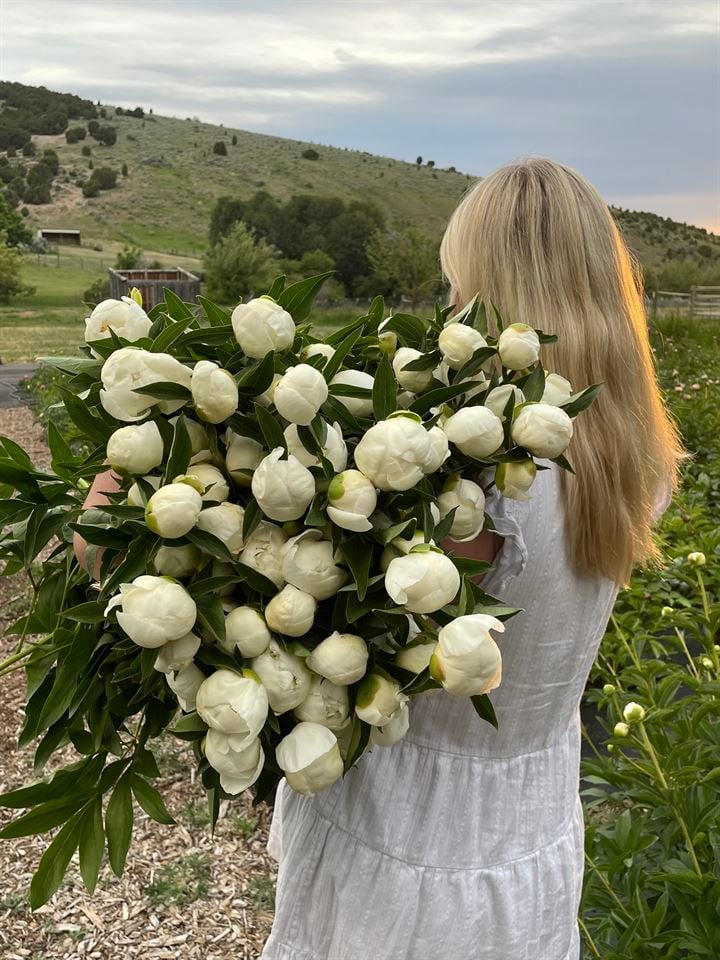
Peonies as Cut Flowers: Cut properly, peonies last well over a week in a vase and perfume an entire room. For best results, harvest in the early morning when buds are at the “marshmallow stage” — soft to the squeeze but not yet fully open. Use clean, sharp pruners and cut just above a set of healthy leaves.
To store cut peonies, wrap stems in a damp paper towel, place in a plastic bag, and refrigerate. They’ll keep for several days to a few weeks. When ready to use, recut stems at an angle under running water and place in a clean vase with lukewarm water. Change the water every couple of days and keep blooms out of direct sun.
In the end, growing peonies is less about chasing perfection and more about patience and stewardship. A well-placed plant, healthy soil, and thoughtful care will reward you year after year with blooms that feel almost timeless. On our farm at Portneuf Valley Peonies, sustainable growing practices aren’t just a philosophy, they’re how we ensure these plants continue thriving for generations to come. Whether you’re planting your first root or tending a garden that’s decades old, the real beauty of peonies is that each season builds on the last, quietly deepening the connection between gardener, soil, and flower.