

The 9 Steps you Need to Choose, Cut, and Care for Peonies at Home
By Melissa Warner, Portneuf Valley Peonies — Pocatello, Idaho
Whether you’re a home gardener dreaming of a cutting garden bursting with peonies, or someone who simply received a gorgeous bouquet and wants it to last as long as possible, this guide is for you. We’ve pulled together everything we know about peonies; from taking your first cutting all the way through to the art of cut flower care.
Let’s dive in.
How to Take Peony Cuttings
When is the right time?
Timing is everything. September is the best time to divide peonies. By then, plants have stored adequate food reserves in their roots for the following year, and the replanted divisions have several weeks to get reestablished before the onset of winter. Here in Pocatello, that window aligns well with our season winding down — though Idaho weather always keeps us on our toes (Idaho weather is crazy)! After the plant has finished blooming, while it’s still actively putting energy into its stems and roots suits the peonies best. Too early and the stem won’t be mature enough; too late and it won’t have time to root before winter. (They’re quite tempermental!)
What You’ll Need
Gather a sharp, clean spade or garden fork for digging, a sharp knife for dividing, and prepared planting holes or pots filled with well-draining soil. Clean tools aren’t just a nicety — dirty blades can introduce disease to a perfectly healthy root, so it’s worth taking a moment to wipe and sterilize them before you start.
Step by Step
Our method is very similar to that of Iowa State’s method for cutting a peony root. Read more here!
1. Cut back the foliage
Begin by cutting the peony stems near ground level. Cut at a 45-degree angle just below a node. The angle maximises surface area for water and root uptake.
2. Dig up the clump
Carefully dig around and under each plant, trying to retain as much of the root system as possible. Work slowly and give yourself plenty of room — peony roots spread wider than you might expect.
3. Clean the roots
Wash or gently shake off the soil so you can clearly see what you’re working with. This is an important step — you need to be able to spot the buds (also called “eyes”) before you start cutting.
4. Identify the eyes
Look over the root clump and locate the reddish growth buds. These eyes are what will become next year’s stems and flowers, so you want to make sure every division has a healthy share of them.
5. Divide the clump
Using a sharp knife, divide the clump into sections. Each section should have three to five buds (eyes) and a good root system. Divisions with fewer than three buds may take two or more years to flower.
6. Inspect the Divisions
Check each division for signs of disease or rot and trim away any damaged root material with a clean cut. Healthy roots should be firm — not mushy or discolored.
7. Dig up your planting holes
8. Plant at the correct depth
9. Backfill, firm, and water
Common mistakes to watch for
The most common culprits behind a failed division are: digging too early in the season before roots have stored their energy, using a dull or dirty knife, planting the eyes too deep, and skipping a thorough watering at planting time. Avoid these and you’re already well ahead.
Caring for Your Peony Plant
Once established, peonies are gloriously low-maintenance. They’re long-lived, hardy, and will come back year after year — some plants live for decades. Here’s what they need to truly thrive.
Sunlight and soil
Peonies are sun-lovers and well-drained soils. Choose a location that receives at least six hours of direct sun each day, and avoid shady areas near large trees and shrubs. Poorly drained soils can often be improved by working in large amounts of compost, sphagnum peat moss, or leaf mold.
Watering
Peonies enjoy consistent moisture in spring during their rapid growing and budding phase. Water deeply but infrequently — let the top inch of soil dry out between waterings. Once established in summer, they’re reasonably drought-tolerant and quite forgiving.
Feeding
A light application of balanced, slow-release fertilizer in early spring sets your plant up for a spectacular season. Avoid high-nitrogen formulas — they push leafy growth at the expense of blooms. After flowering, a potassium-rich feed supports strong root development going into winter.
Cutting back in autumn
Once flowers fade, remove spent blooms to keep the plant tidy and prevent seed formation (which diverts energy away from roots). After the first frost in autumn, cut all the foliage back to the ground; this prevents disease and gives your peonies a clean, fresh start come spring.
Cut Flower Care — Making Every Bloom Last
Whether you’ve grown them yourself or picked them up from us, the care you give cut peonies has a huge impact on how long they last. With a little know-how, you can easily enjoy them for one to two weeks.
The perfect moment to cut
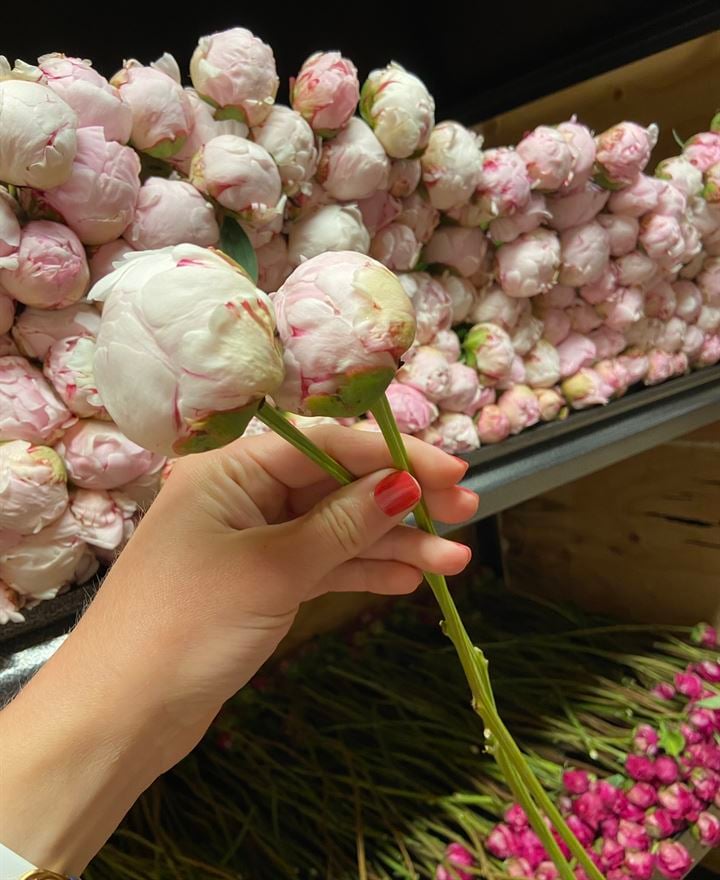
For the longest vase life, cut stems early in the morning when buds are still in the “marshmallow stage” — soft and squishy, but still closed. At this stage, the flower holds all the energy it needs to open beautifully and will outlast a fully open bloom by several days.
Preparing your stems
Using clean, sharp scissors or snips, cut at a 45-degree angle to maximise water uptake. Place stems in cool, clean water immediately — don’t leave them out of water even briefly. Remove any leaves that would sit below the waterline, as submerged foliage breeds bacteria rapidly.
1. Change the water every 2 days:Fresh water every couple of days is the single most effective thing you can do to extend vase life. Bacteria at the stem base is the number one enemy of cut flowers.
2. Re-trim the stems: Each time you change the water, snip a small amount off each stem at an angle. This opens up fresh tissue for water absorption and keeps things drinking well.
3. Keep them cool: Peonies last noticeably longer in cool rooms, well away from direct sun, heat vents, and fruit bowls. Ethylene gas from ripening fruit accelerates petal drop surprisingly quickly.
4. Try the overnight fridge trick: If a bloom is opening faster than you’d like, pop the vase in the fridge overnight. This is exactly what florists do to hold peonies at their peak — it genuinely works wonders.
Florist’s Secret: Store buds for later
Cut peony stems at the marshmallow stage, wrap them loosely in dry newspaper, and store flat in the fridge for up to 3 weeks. When you’re ready, re-cut the stems, place in warm water, and they’ll open just as beautifully as the day they were cut. It’s how we keep peonies available log after their natural season.
How long will they last?
With good care, cut peonies typically last 5 to 14 days. The key variables are stem freshness, room temperature, and how consistently you change the water. A cool room and clean water really are the two biggest factors — keep those right and the rest takes care of itself.
A Little Note Before You Go
Peonies are one of those flowers that feel like a gift every single time, whether they’re tumbling over a garden fence or arranged in a vase on your kitchen table. We hope this guide gives you the confidence to grow them, care for them, and enjoy absolutely every petal. If you ever have questions about peonies or honestly, about any flower we’re always happy to chat. That’s exactly what we’re here for.