

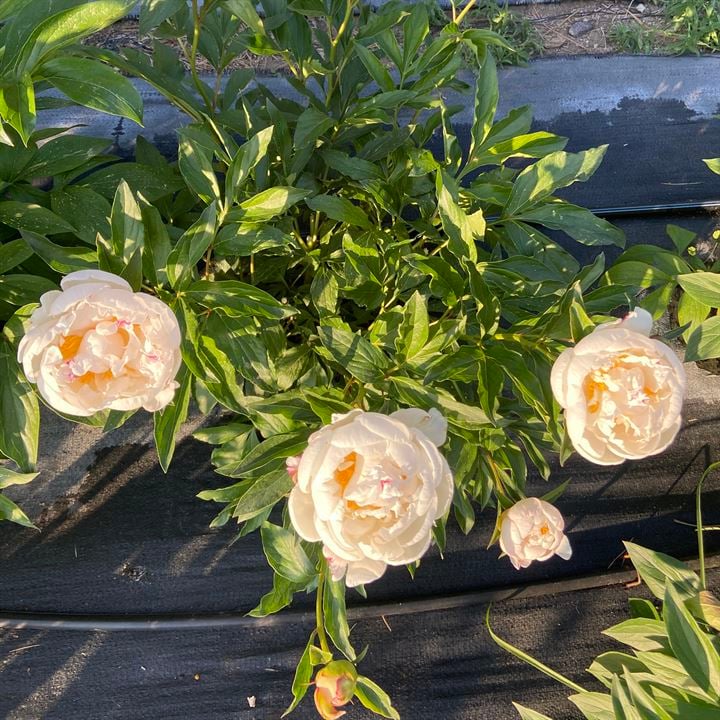
Why Didn’t My Peonies Bloom? 7 Common Problems (and Easy Fixes)
By Melissa Warner, Portneuf Valley Peonies — Pocatello, Idaho
Every June, we hear a version of the same story at the Portneuf Valley Farmers Market. A gardener walks up to our booth, a little deflated, and says something like: “My peonies have gorgeous leaves this year, but I didn’t get a single bloom. What did I do wrong?”
If that sounds familiar, take a breath. You didn’t kill your peony. You almost certainly didn’t do anything catastrophic. Peonies are some of the most forgiving, long-lived plants you can grow — some of the bushes on our farm have been blooming in the same spot for decades — but they’re also picky about a handful of specific things. When one of those things is off, the plant channels its energy into leaves instead of flowers and waits for better conditions.
We’re former chemical engineers who traded lab coats for garden gloves, so we can’t help but look at a non-blooming peony like a puzzle with a knowable answer. In our experience, almost every case comes down to one of seven causes. Walk through them with us, and there’s a good chance you’ll spot yours.
The Short List: Why Peonies Skip Their Bloom
Before we go deep on each one, here’s the quick version. Most bloom failures trace back to:
Planted too deeply
Still too young to flower
Getting too much shade
Damaged by a late frost
Overfed with nitrogen
Stressed from a recent move or drought
Affected by disease or bud damage
Let’s take them one at a time — starting with the one we see the most.
Problem #1: Your Peony Is Planted Too Deep
This is, by far, the most common culprit. If we had to bet on the reason behind your bare-but-leafy peony, we’d bet here first.
Peonies break the usual planting rules. Most perennials like to be tucked in snugly, but peonies actually prefer to sit close to the surface. In most Idaho gardens, the pink “eyes,” or growing buds, should sit only 1 to 2 inches below the soil. Plant them any deeper, and you’ll often get lush, healthy foliage — and almost no flowers.
Why depth matters so much
Peonies need a real winter chill to trigger flower development the following spring. When the eyes are buried too deep, they’re insulated from the cold they’re counting on, so the plant grows leaves but never gets the signal to bloom.
How to fix it
The good news is that this is fixable. In early fall:
Carefully lift the root out of the ground.
Replant it with the eyes just 1 to 2 inches below the soil surface.
Water it thoroughly to help it settle.
Be patient. It may take a full season before the plant flowers again.
Farm Tip Nearly half of the bloom problems we diagnose for other gardeners trace straight back to planting depth. It’s the first thing we check. |
Problem #2: Your Peony Is Simply Too Young
Peonies teach patience, whether you’re ready for the lesson or not. A newly planted root spends its first few years building an extensive system underground before it ever invests energy into flowers.
Here’s roughly what to expect:
Plant Age | What to Expect |
Year 1 | Root establishment |
Year 2 | Strong foliage, few flowers |
Year 3 | Several blooms |
Year 4+ | Full flowering potential |
A lot of gardeners start to worry after that second spring, watching all that healthy green growth and wondering where the flowers went. Most of the time, nothing is wrong at all — the plant is simply investing in decades of future blooms. A peony can flower beautifully for 50 years or more, so waiting two or three seasons is a pretty small price for that kind of payoff.
Problem #3: Too Much Shade
Peonies are sun lovers, plain and simple. For reliable flowering, they generally need 6 to 8 hours of direct sunlight a day.
The tricky part is that shade often creeps in slowly. A tree that was a sapling when you planted your peony can, ten years later, be casting a shadow over the whole bed. Common culprits we see include:
Mature maple trees
Evergreen windbreaks
Expanding shrubs
New fences or buildings
If your peony has long, floppy stems, healthy leaves, and only a handful of buds, shade is worth investigating. If your garden has gotten shadier over the years, consider moving the plant to a sunnier spot in autumn.
Problem #4: Idaho’s Weather Had Other Plans
Gardening in Southeast Idaho means making peace with unpredictable springs. A warm April can coax flower buds into early development — and then an overnight freeze can damage them before they ever get the chance to open.
Often, the leaves come through just fine while the buds don’t. Signs of weather damage include:
Brown buds
Blackened tips
Buds that stop growing
Buds that dry up before opening
There’s no fixing frost damage once it happens. The bud is done for the season. But the encouraging part is that peonies almost always bounce back the following year without any lasting harm.
Problem #5: Too Much Fertilizer
More fertilizer doesn’t necessarily mean more flowers — sometimes it means the opposite. High-nitrogen fertilizers push lush green growth at the expense of blooms, and we see this most often when peonies are growing near a lawn and catching runoff from lawn fertilizer.
A balanced fertilizer, or one formulated specifically for flowering perennials, is a better match. For mature, established peonies, healthy soil and a bit of compost are often all they really need.
Problem #6: The Plant Is Under Stress
Peonies don’t love change. If yours has been through a recent disruption, that alone can be enough to interrupt flowering for a season. Common sources of stress include:
Transplanting
Drought
Poor drainage
Root disturbance
Competition from nearby plants
The good news is that most healthy plants recover on their own. Consistent watering and a little patience usually bring better blooms the following spring.
Problem #7: Disease or Bud Damage
Occasionally, flower buds form but never open at all. In cool, wet springs, this is often the work of Botrytis blight, a fungal disease that targets developing buds.
Watch for:
Brown buds
Gray, fuzzy mold
Blackened stems
Collapsing flower buds
Good garden sanitation goes a long way toward prevention: remove dead foliage in autumn, avoid overhead watering, water at soil level instead, and give your plants enough space for good air circulation. The silver lining for Idaho gardeners is that Botrytis is far less common here than in more humid climates.
Quick Troubleshooting Guide
If you just want the short answer, match your symptom to the likely cause below.
Symptom | Most Likely Cause | Solution |
Healthy leaves, no flowers | Planted too deep | Replant in fall |
Small plant | Too young | Give it time |
Tall, leafy growth | Too much nitrogen | Reduce fertilizer |
Brown flower buds | Frost damage | Wait until next season |
Weak stems | Too much shade | Increase sunlight |
Buds rot before opening | Botrytis | Improve airflow |
Recently transplanted | Stress | Water consistently and be patient |
The Idaho Advantage
Here’s the part we love most about growing peonies in Southeast Idaho: our cold winters do exactly what these plants need. When they’re planted at the right depth, given full sun, and allowed time to establish, peonies genuinely thrive in our high-desert climate.
Many of the spectacular blooms visitors see on our farm each June come from plants that have been growing happily in the very same spot for decades. Sometimes, honestly, the best thing you can do for a peony is simply leave it alone.
Frequently Asked Questions
Why didn’t my peony bloom but still has lots of leaves?
The most common causes are planting too deeply, too much shade, excess nitrogen fertilizer, or the plant simply being too young.
How long does it take for peonies to bloom after planting?
Most peonies begin flowering in their second or third year, with full production typically arriving after three to five years.
Can I move a peony that isn’t blooming?
Yes. Early fall is the best time to transplant peonies. Just make sure the eyes are replanted only 1 to 2 inches below the soil.
Will a late frost stop peonies from blooming?
Yes. A hard freeze can damage developing flower buds even when the foliage survives without any visible harm.
Should I fertilize peonies every year?
Light feeding with compost or a balanced fertilizer is usually enough. Avoid heavy nitrogen, which encourages leaves instead of flowers.
Ready for Bigger, Better Blooms?
A peony that skips a season isn’t necessarily unhealthy — more often, it’s simply telling you that something in its growing conditions needs a small adjustment. Correct the underlying issue, give the plant a little patience, and there’s a good chance you’ll be rewarded with spectacular blooms for many years to come.
At Portneuf Valley Peonies, we’ve learned that the most beautiful flowers usually come from understanding the science behind the plant — and then getting out of nature’s way.
Recommended Reads
Prepping Your Idaho Soil: 3 Mistakes to Avoid When Growing Peonies in Idaho
Stunning Peonies in Idaho: Your Complete Bloom Forecast (bloom timing)
The 9 Steps You Need to Choose, Cut, and Care for Peonies at Home
External DoFollow Resources
American Peony Society – Growing Peonies