


How to Transplant Peonies in Fall: Divide and Move Them Without Sacrificing Blooms
By Melissa Warner, Portneuf Valley Peonies — Pocatello, Idaho | October 2026
Wondering how to transplant peonies without losing those beautiful spring flowers? The good news is that peonies are remarkably resilient. With the right timing, careful handling, and proper planting depth, you can move an established peony or divide a mature clump to create new plants.
But there is one thing every gardener should understand before reaching for a shovel: peonies don’t particularly enjoy being disturbed.
These long-lived perennials can thrive in one spot for decades. Moving them unnecessarily can delay flowering, especially if roots are damaged or planted too deeply.
Here at Portneuf Valley Peonies in Pocatello, Idaho, we know how much gardeners look forward to those spectacular blooms after a long winter. This guide shares seven practical steps on how to transplant peonies, minimize transplant shock, and give your plants the best chance to bloom again.
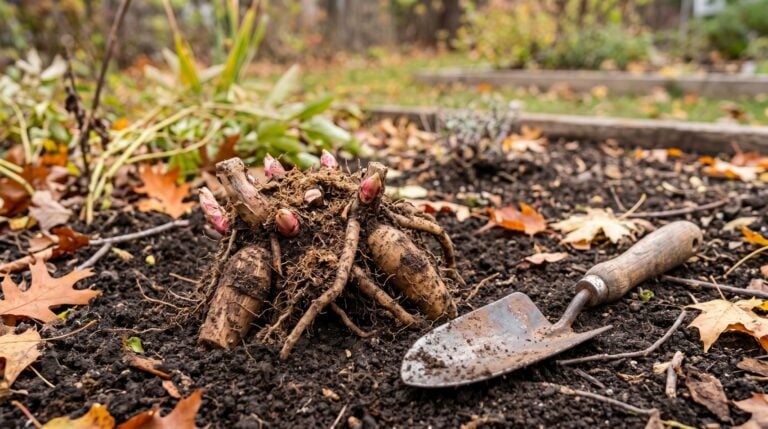
When to Transplant Peonies: Why Fall Is the Best Season
Timing is one of the most important parts of how to transplant peonies. For established herbaceous peonies, early fall is generally the best time to move or divide plants.
Over summer, peony leaves produce energy that is stored in the roots. As the season winds down, plants shift toward dormancy and invest in root development. Fall transplanting works with that natural cycle.
The American Peony Society recommends fall planting because peonies produce much of their new root growth during this season.
How to Transplant Peonies in Idaho: Timing for Pocatello Gardens
For gardeners in Pocatello and Southeast Idaho, September through early October is a useful target for moving established peonies. Ideally, finish the work while the soil is still workable and the roots have time to begin establishing before winter. Our guide to when to plant peonies in Idaho goes deeper on timing.
Reading this in late October? You haven’t necessarily missed your chance. Fall planting can continue while the ground remains unfrozen, although earlier transplanting gives plants longer to establish.
Farm Tip: Don’t wait for the ground to freeze. A cool fall day with workable soil is much better than trying to rescue a peony from frozen ground.
Should You Divide Peonies or Simply Move Them?
Before digging, ask: does this peony actually need dividing? Unlike many perennials, peonies don’t require routine division, and a mature plant can stay productive in one spot for many years.
However, dividing or transplanting may make sense when:
Your peony is growing in too much shade.
You’re redesigning a bed or moving to a new home.
Nearby trees or shrubs are competing for sun and nutrients.
The planting location has poor drainage.
You want to propagate a favorite variety from a large, healthy clump.
If your peony is healthy, flowering beautifully, and growing in a suitable location, leaving it alone is often the best decision.
Moving versus dividing: Transplanting means relocating a plant. Dividing means separating its crown and roots into smaller plants. Large, established clumps may benefit from careful division, but it isn’t required.
How to Transplant Peonies in 7 Essential Steps
These steps focus on traditional herbaceous garden peonies. Tree peonies and intersectional (Itoh) peonies have different growth habits and may need different planting and division techniques.
Step 1: Choose the Right Location
Before you dig up your peony, prepare its new home. The first rule of how to transplant peonies is to choose a spot where they grow best, with:
At least six hours of direct sunlight daily.
Well-drained soil that doesn’t remain waterlogged.
Enough space for air circulation and mature growth.
Limited competition from large trees and shrubs.
Room to remain undisturbed for years.
In Southeast Idaho, sunlight and drainage deserve particular attention. A peony planted too close to a large tree may struggle with shade and root competition, and a low-lying area where water collects can cause problems during wet weather and winter. Plan for approximately three to four feet between mature plants.
Farm Tip: A peony may live in that spot for decades, so think about how nearby trees and landscaping will change over time.
Step 2: Prepare the New Planting Hole
One of the easiest ways to reduce stress when you learn how to transplant peonies is to prepare the new planting area before lifting the existing plant.
Dig a hole wide enough to hold the roots without bending or crowding them, and loosen the surrounding soil.
If your soil is compacted or drains poorly, improve the area with appropriate organic matter. Avoid a planting hole that holds water like a bathtub.
Skip heavy fertilizer. Too much nitrogen can encourage leafy growth instead of flowers. Drainage, suitable soil, and correct planting depth matter most.
Step 3: How to Transplant Peonies Without Damaging the Roots
Now comes the part that requires patience. Use a garden fork or spade to loosen the soil around the plant, beginning well away from the crown. Work around the peony gradually rather than forcing a shovel under its center.
Peonies have thick, fleshy storage roots that extend surprisingly far into the soil. Damaging them slows recovery.
Once the soil is loose, carefully lift the clump. Gently shake off excess soil, or rinse the roots lightly to see the crown. Never pull the plant out by its stems.
Farm Tip: Peony roots can be larger and more fragile than expected. Protecting healthy roots now gives the plant a better start in its new location.
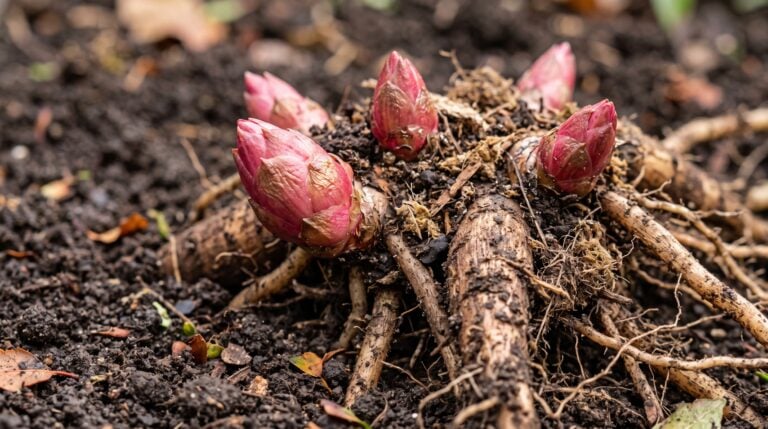
Step 4: Learn How to Divide Peonies Properly
If you’re moving the entire plant, you may not need to divide it. If you’re propagating an established peony, this is how to divide peonies: separate the root clump now.
First, identify the eyes. Peony eyes are small, often pinkish or reddish buds near the crown. They are the growing points that produce next season’s stems.
Using a clean, sharp knife, divide the crown into sections. For traditional herbaceous peonies, each division should ideally have:
Three to five healthy eyes.
A substantial, healthy root system.
Firm roots without obvious signs of rot.
Enough crown tissue to support new growth.
Why three to five eyes? According to Iowa State University Extension, divisions with fewer than three buds may require several years before producing a good flower display. A balanced division with healthy roots and viable buds matters more than a big one.
Discard severely damaged or rotting tissue, and clean your tools between plants, especially if disease is suspected.
Farm Tip: Don’t try to turn one peony into as many tiny plants as possible. A few strong divisions are usually a better investment than many weak ones.
Step 5: Replant at the Correct Depth
If there is one detail we want every gardener to remember about how to transplant peonies, it’s this: planting depth can make the difference between a healthy peony that flowers and one that produces leaves but few blooms.
For herbaceous peonies in cold-winter regions such as Southeast Idaho, position the eyes approximately one to two inches below the finished soil surface. The eyes should face upward, with the roots positioned comfortably underneath.
Backfill gently so there are no large air pockets, and firm the soil lightly without compacting it. Check the depth again after watering because the soil may settle.
Planting too deeply is a common reason peonies fail to bloom, and the American Peony Society specifically identifies excessive planting depth as a potential cause of poor flowering. If your peonies are already in the ground and not blooming, see why peonies don’t bloom.
Important: These depth recommendations are for herbaceous peonies. Grafted tree peonies and some intersectional peonies require different planting considerations.
Step 6: Water Thoroughly and Protect the Roots
After you transplant peonies, water them thoroughly. This helps settle the soil around the roots and reduces air pockets. Keep monitoring soil moisture through fall. The goal is soil that stays lightly moist while roots establish, not constantly saturated ground.
In Pocatello, autumn can change quickly, from warm, dry afternoons to freezing nights. Water when needed, especially if fall is unusually dry and the ground remains unfrozen.
A temporary winter mulch may help reduce soil heaving from repeated freezing and thawing. Apply it after the ground begins freezing, and pull it back from the crown in spring. A thick layer over the eyes can effectively increase planting depth.
Step 7: Give Your Peony Time to Recover
Once you know how to transplant peonies and finish the job, the hardest part is waiting. Transplanted peonies often need time to rebuild their root systems, so you might see healthy leaves the following spring but fewer flowers than expected.
Some plants bloom again quickly. Others need two or three growing seasons to return to a strong display, especially if they were divided small. That doesn’t mean your transplant failed.
Watch for healthy spring growth, keep moisture suitable, and resist digging the plant up to check its roots. Peonies reward patience.
How to Transplant Peonies Without Transplant Shock
Transplant shock is the temporary stress plants feel when their roots are disturbed. For peonies, it can look like reduced vigor, fewer blooms, or slower establishment.
Prevent unnecessary stress from the start with these five strategies:
Transplant in fall. Avoid moving established plants during spring growth or summer heat when you can.
Protect the storage roots. Keep as much healthy root as possible.
Maintain the correct planting depth. Don’t bury herbaceous peony eyes too deeply.
Provide appropriate moisture. Water after planting without waterlogging the soil.
Be patient. Skip repeated digging and heavy fertilizing.
No special product guarantees instant blooms. Good timing, careful handling, and suitable growing conditions matter much more.
5 Common Mistakes When Moving Peonies in Fall
Even experienced gardeners slip up. Knowing how to transplant peonies also means knowing what to avoid.
Transplanting too late into frozen soil. Cold air alone isn’t a problem, but frozen ground makes proper planting difficult.
Planting the eyes too deeply. This is one of the most common causes of poor flowering.
Dividing the plant into tiny pieces. Small divisions with few roots may take much longer to flower.
Moving a peony into too much shade. It may survive, but it will likely produce fewer flowers.
Expecting a full display immediately. Don’t judge the transplant only by the first spring’s blooms.
How to Transplant Peonies: Frequently Asked Questions
Can I transplant peonies in October?
Yes, October can be suitable for transplanting peonies, particularly when the soil remains unfrozen. In Southeast Idaho, earlier fall transplanting is preferable when possible because it allows more time for root establishment before winter.
Can I transplant peonies without dividing them?
Yes. How to transplant peonies doesn’t require division: you can lift and relocate a peony with its roots intact. Division is optional, particularly when the plant is healthy and you don’t need additional plants.
Should I fertilize peonies immediately after transplanting?
Heavy fertilization is generally unnecessary. Focus first on appropriate soil, good drainage, correct planting depth, and watering. Use a soil test to guide nutrient amendments rather than fertilizing heavily by default.
Can I transplant peonies in spring instead of fall?
Spring transplanting is possible when necessary, but for how to transplant peonies with the best results, fall is generally preferred for established peonies. Spring movement can disturb active growth and may lead to slower establishment or reduced flowering.
Your Fall Checklist: How to Transplant Peonies Successfully

Before you finish your fall garden work, make sure you’ve covered these essentials of how to transplant peonies.
Choose a suitable fall transplanting window.
Identify your peony type before digging.
Select a sunny, well-drained planting location.
Prepare the new hole before lifting the plant.
Dig carefully to protect healthy storage roots.
Divide only when needed.
Keep three to five healthy eyes on each herbaceous division.
Position herbaceous peony eyes one to two inches below the soil surface.
Space mature plants approximately three to four feet apart.
Water thoroughly after planting.
Monitor moisture until the ground freezes.
Use temporary winter mulch when appropriate and remove it in spring.
Give the plant time to recover before expecting a full bloom display.
Healthy Spring Blooms Begin With Thoughtful Fall Care
Learning how to transplant peonies isn’t complicated, but it does require understanding how these plants grow. Choose the right season. Protect the roots. Pay attention to planting depth. And resist the temptation to expect instant results.
Here at Portneuf Valley Peonies in Pocatello, fall is a reminder that beautiful gardens depend on more than the flowers we see in spring. A carefully transplanted peony may take time to settle into its new home, but with proper care it can reward you with beautiful flowers for many years to come.
Want to learn more about growing healthy peonies in Idaho? Explore our complete peony care guide, discover when to cut back peonies in fall, browse our peony varieties and care tips, or see more growing tips from Portneuf Valley Peonies. Ready to add new plants or cut flowers? Shop our peonies or contact us with questions.
Grow with patience, enjoy the blooms, and let every season teach you something new.
Sources and Further Reading